Block Paving vs Tarmac for an Irish Driveway: Which One Holds Up Better
, by Orla Keane, Driveways and Groundworks
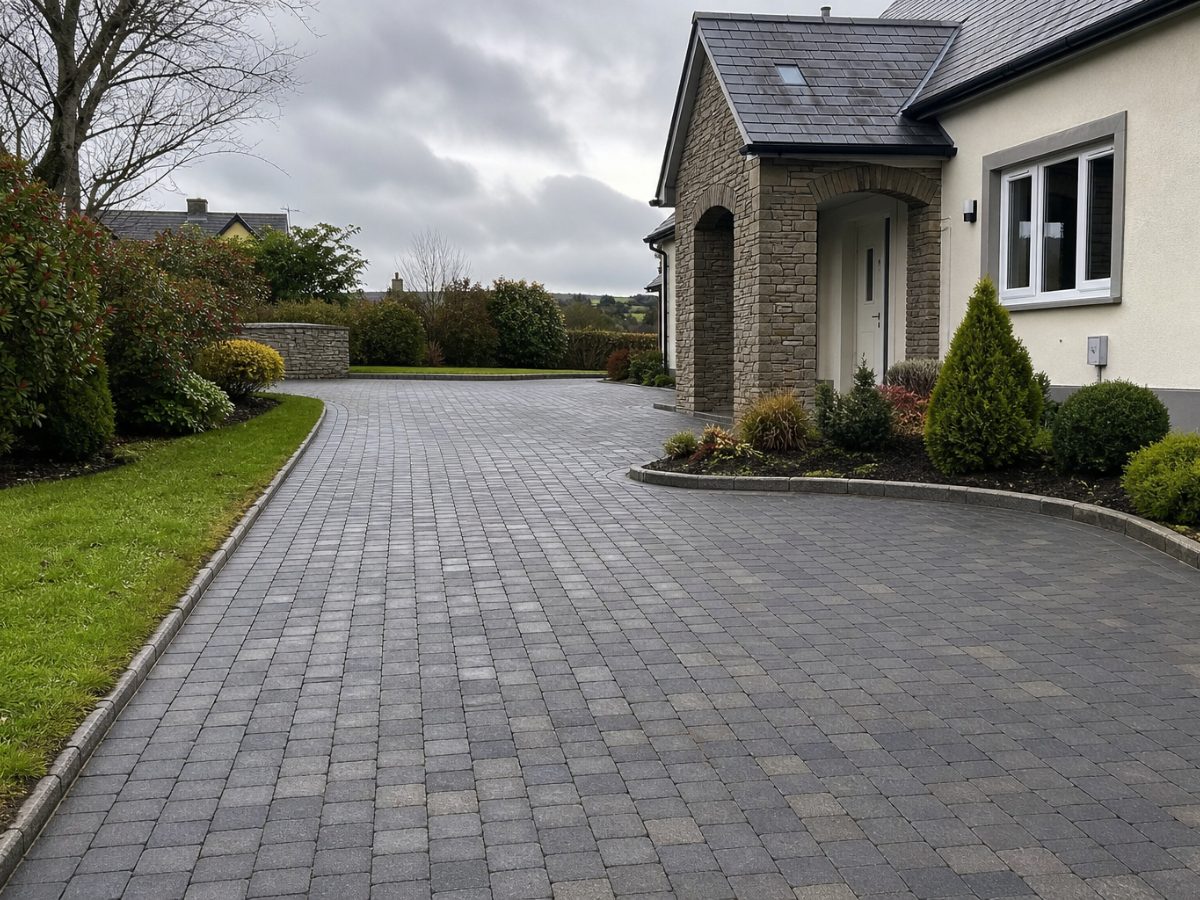
Two neighbours on the same road, same budget, same wet Irish winter. One goes with block paving, one goes with tarmac. Five years later, they have very different opinions. That is basically the story of every driveway decision in this country, and the honest answer is that neither material is universally better. What matters is understanding what each one actually does in our conditions.
Cost: What You Will Actually Pay
Tarmac is cheaper to install. That is the plain truth. A straightforward tarmac driveway will typically cost somewhere in the region of 40 to 60 euro per square metre, depending on where you are in the country, how much preparation the ground needs, and whether there is edging or drainage work involved. Prices in Dublin and the commuter belt tend to run higher than rural counties.
Block paving costs more, usually somewhere between 70 and 120 euro per square metre for standard concrete blocks, and it can climb higher again for natural stone or imported granite. The reason is the labour. Laying blocks properly is slow, skilled work. The ground preparation, the sand bed, the cutting around edges, the compacting. Do that right and you have a driveway that can last decades. Rush it and you will have sunken patches and gaps within three or four years.
So if budget is the deciding factor, tarmac wins on day one. But cost over the lifetime of the driveway is a different calculation.
How Each One Handles Irish Weather
This is where the comparison gets interesting, because Atlantic weather is not kind to either material, but it causes different problems for each.
Tarmac softens in prolonged heat. Not something we worry about in November, but a proper summer or even a few warm weeks in May can leave tarmac slightly tacky. Vehicles parked in the same spot can leave marks. More importantly, tarmac is a solid surface, which means water has nowhere to go. In areas with poor natural drainage or on sloped ground, runoff becomes a real issue. Planning permission for new driveways under Irish regulations now generally requires that you manage surface water on your own property rather than letting it drain straight to the public road. A solid tarmac surface without proper drainage built in can fall foul of this, and it is worth understanding your obligations before you commit.
Block paving, if laid correctly with permeable jointing or adequate falls to a drain, handles water much better. The gaps between blocks allow some water to filter through, and a well-designed block driveway can be genuinely permeable, which satisfies planning requirements and reduces puddles. That said, the gaps are also where weeds get in. Every block driveway owner in Ireland knows the spring ritual of spraying or pulling weeds from the joints. It is not a dealbreaker, but it is a recurring job.
Frost is another consideration. Both materials can be damaged by repeated freeze-thaw cycles. Tarmac can crack, especially at edges. Block paving can heave if the sub-base is not deep enough or was poorly compacted. The sub-base is everything with block paving, a point worth stressing when you are talking to contractors.
Longevity and What Goes Wrong
A well-laid tarmac driveway, properly maintained, can last 15 to 25 years before it needs major work. Sealing it every few years extends that lifespan. Cracks can be patched, though patches are visible and the colour match rarely holds. If the tarmac fails beneath the surface due to poor drainage or a bad base, you are often looking at a full strip-out and relay.
Block paving, again when done properly, can outlast tarmac significantly. Individual blocks can be lifted and replaced if they sink or crack. That is a genuine advantage. A sunken area caused by a leaking pipe or a compaction failure does not mean ripping up the whole thing. You dig up the affected section, fix the problem, relay the blocks, and you are done. The surface looks the same as before, which tarmac cannot match.
The weak point of block paving is installation quality. More so than tarmac, it depends on the skill and honesty of whoever lays it. The questions you should ask a contractor before they start work apply just as much to groundwork as they do to any other trade. Ask about the sub-base depth they plan to use. Ask how they handle drainage. If they look at you blankly or wave the question away, keep looking.
Which One to Choose
For a tight budget on a flat, well-drained site, tarmac is perfectly respectable and will do the job for years. For a sloped site, heavy vehicle use, or anywhere drainage is a concern, block paving laid by someone who knows what they are doing is the better long-term investment. The extra cost upfront is the price of not having to make the same decision again in ten years.