Flat Roofs Get a Bad Reputation in Ireland, But Are They Really That Unreliable
, by Orla Keane, Roofing Advice
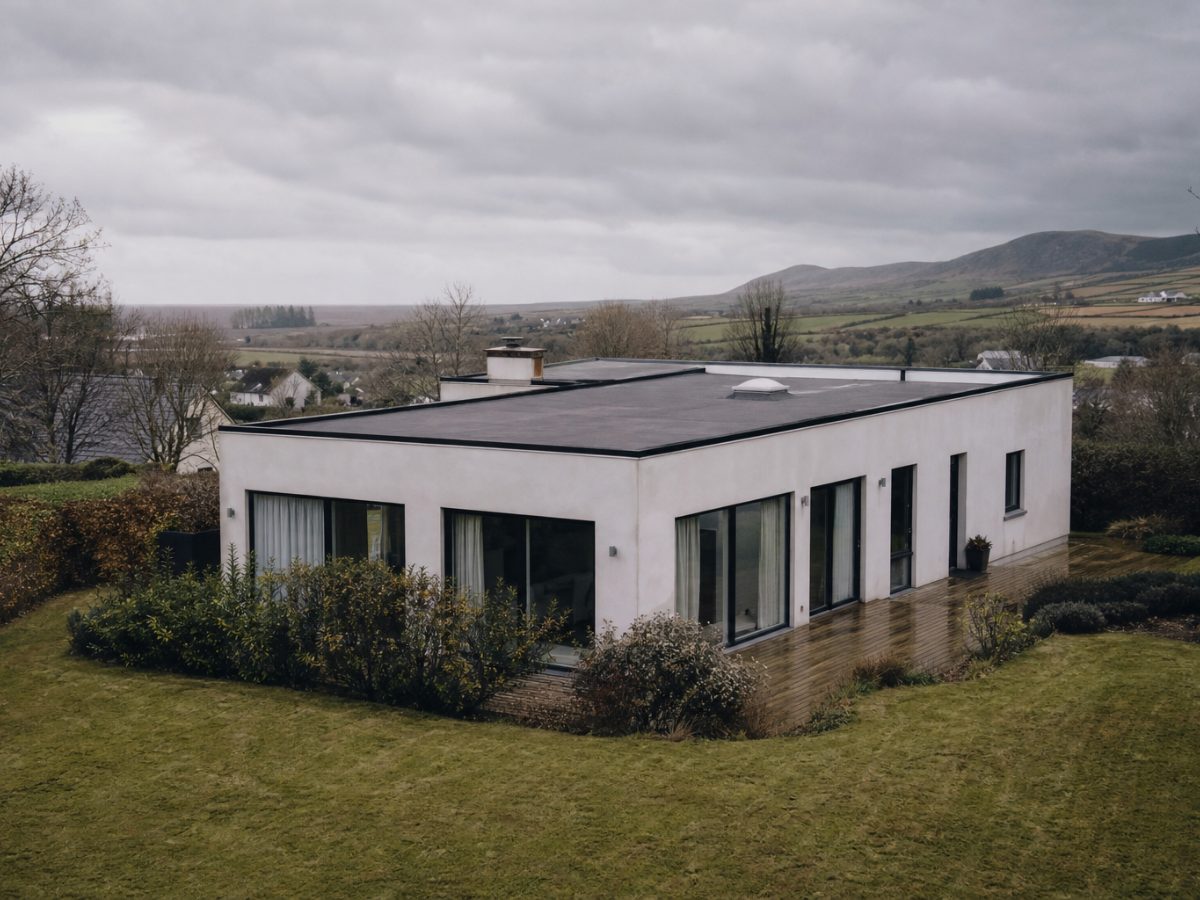
Ask almost any Irish homeowner what they think of flat roofs and you'll get the same answer: avoid them. There's a widely held belief in this country that flat roofs are basically a ticking clock, something a builder puts on a garage or extension and you spend the next decade patching and worrying about. That reputation didn't come from nowhere. A lot of older flat roofs, laid with felt in the 1970s and 1980s, really were poor performers. They cracked, they pooled water, they leaked into ceilings and caused damage that cost far more to fix than the original roof ever did.
But it's 2024, and the materials have changed significantly. The felt that gave flat roofs their bad name is largely a thing of the past on any job done properly. Modern systems, particularly EPDM rubber membrane and fibreglass (GRP), are a different proposition entirely. EPDM, which is a single-ply rubber sheet, can last 30 to 50 years with minimal maintenance if it's installed correctly and the falls are right. Fibreglass roofing is similarly durable and handles foot traffic better than old felt ever did. These aren't theoretical claims: they're what roofing contractors who have been working with these materials for 15 or 20 years will tell you themselves.
The issue is that the materials are only part of the story. Installation quality matters enormously with any flat roof system, more so than with pitched roofing where gravity does some of the work for you. If the falls, meaning the slight slope built into the roof to drain water off, are inadequate, you get ponding. Ponding accelerates wear on any membrane over time. Even a good product fails early if the substrate beneath it is poorly prepared or if there are penetrations, such as rooflights or pipes, that haven't been sealed and flashed properly. That's where a lot of modern flat roofs still go wrong, not the membrane itself but the detailing around edges and protrusions.
Ireland's climate adds another layer of consideration. We're not dealing with extreme cold in the way parts of Scandinavia are, but we do get consistent wet, the kind of relentless soft rain and damp that sits on surfaces and finds any weakness. A flat roof here needs good drainage and needs to be checked periodically, maybe once a year, just to clear debris and confirm nothing is lifting at the edges. That's a reasonable ask for a long-lasting roof, but it does mean flat roofs reward attentive ownership more than a pitched slate roof does.
There are situations where I'd still be cautious. If a roofer is quoting you a very low price for a flat roof on a rear extension and you can't get a straight answer about what system they're using or how they'll handle the falls, walk away. The questions you ask before work starts matter as much as the work itself, and knowing what to ask a roofer before they start can be the difference between a roof that lasts and one that's leaking within a few years.
Also worth keeping in mind: even well-installed roofs can develop problems if there are underlying issues with how the structure was built or how ventilation is managed. I've seen cases where a perfectly decent membrane job started failing prematurely because of problems that had nothing to do with the roof material itself, something I've come to understand better after reading about why new roofs can start leaking after only a few years.
Flat roofs aren't inherently unreliable. Bad ones are unreliable. The distinction matters a great deal when you're deciding whether to re-roof a garage or add an extension at the back of the house.